A Ladakh motorcycle trip is very different from a regular highway ride. Long distances, high-altitude roads, steep climbs, unpredictable weather, rough terrain, and limited access to repair facilities can put significant demands on both the rider and motorcycle.
A Royal Enfield can be a capable touring companion for such a journey, but proper preparation is essential. Before heading toward Leh, Khardung La, Pangong Lake, Nubra Valley, or other high-altitude destinations, make sure your motorcycle is mechanically ready and equipped for the conditions.
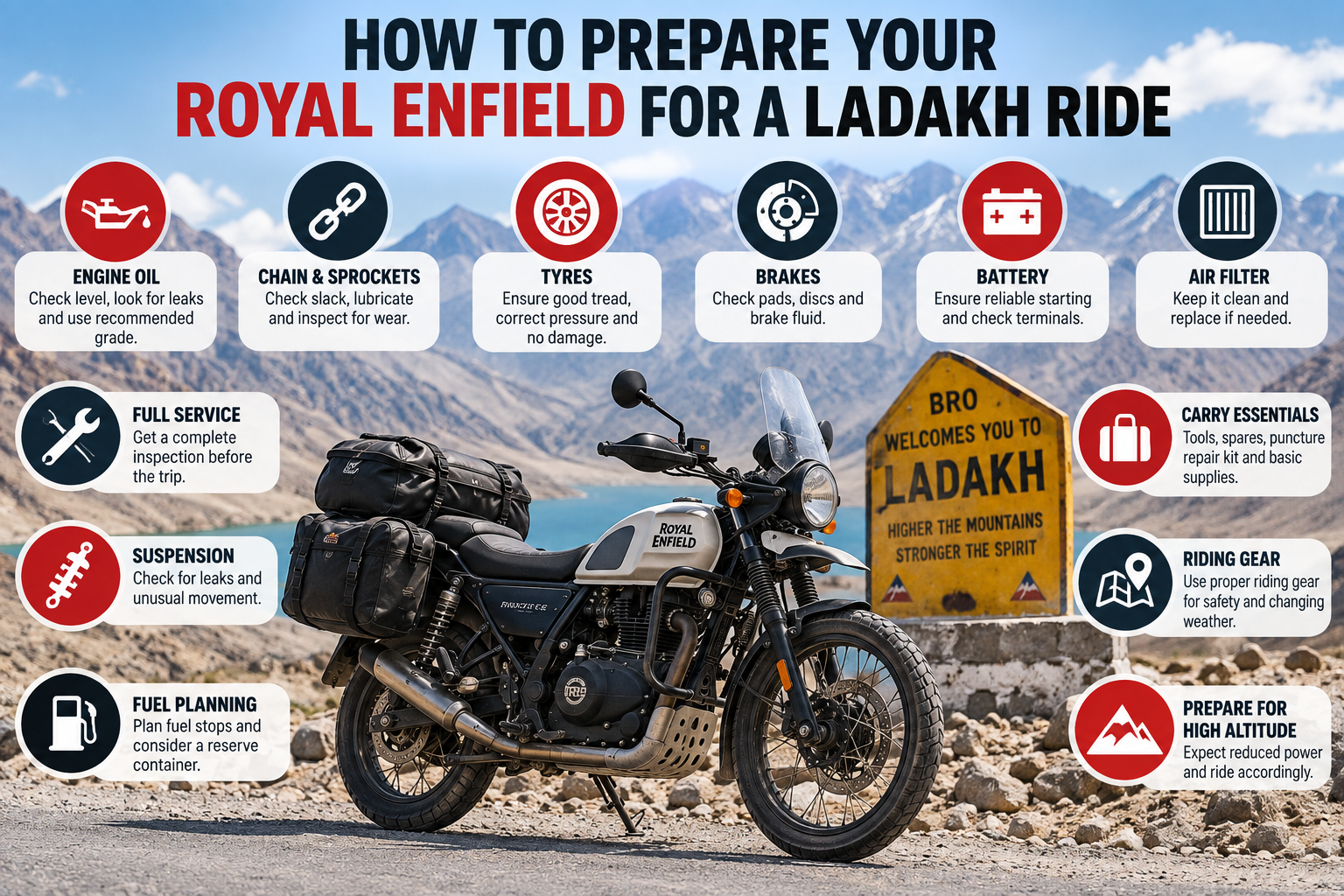
Here is a practical checklist for preparing your Royal Enfield for a Ladakh ride.
1. Get a Complete Service Before the Trip
Don’t start a Ladakh trip with an overdue service. Have the motorcycle thoroughly inspected before departure.
Ask the technician to check:
- Engine oil and oil filter
- Air filter
- Brake pads and discs
- Chain and sprockets
- Clutch operation
- Battery
- Suspension
- Steering bearings
- Wheel bearings
- Electrical connections
- Cables and controls
- Tyres and wheels
Any worn component should ideally be replaced before the journey rather than waiting for it to fail on the road.
2. Check the Engine Oil
Long climbs and extended riding can put additional thermal and mechanical load on the engine.
Check the oil level before departure and use only the oil grade and specification recommended for your specific Royal Enfield model.
Also inspect the engine for leaks.
Carry a small quantity of compatible spare engine oil if your trip involves remote areas where the correct specification may not be readily available.
3. Inspect the Chain and Sprockets
Ladakh involves long stretches of riding, steep climbs, and dusty roads. Your chain needs to be in good condition before you leave.
Check for:
- Excessive slack
- Tight spots
- Rust
- Stiff links
- Worn sprocket teeth
- Unusual chain noise
Clean and lubricate the chain according to the manufacturer’s recommendations.
If the chain or sprockets are already significantly worn, replace them before the trip.
4. Choose Your Tyres Carefully
Tyres are among the most important components for a Ladakh trip.
You’ll encounter a mixture of:
- Smooth highways
- Broken roads
- Gravel
- Loose stones
- Dirt
- Mud
- Water crossings
Inspect the tyres for tread depth, cuts, cracks, punctures, and uneven wear.
Choose tyres that are appropriate for your motorcycle and the type of riding you expect to encounter. Avoid starting a long trip with tyres that are already close to the end of their usable life.
5. Check Brakes Thoroughly
Mountain roads require reliable braking, particularly during long descents.
Before leaving, inspect:
- Front brake pads
- Rear brake pads
- Brake discs
- Brake-fluid condition and level
- Brake hoses
- Lever feel
If the pads are approaching their replacement limit, replacing them before the trip is preferable to waiting until you’re in a remote area.
6. Inspect the Battery and Electrical System
Cold temperatures and high-altitude conditions can make starting more demanding.
Check:
- Battery condition
- Battery terminals
- Charging system
- Headlight
- Tail light
- Brake light
- Turn indicators
- Horn
- Fuses
Make sure electrical connections are secure and free from corrosion.
7. Carry a Puncture Repair Kit
A puncture can become a major problem when you’re far from a town or workshop.
Your luggage should include an appropriate puncture-repair solution for your motorcycle, along with the tools required to use it.
Also consider carrying:
- Portable air compressor
- Tyre-pressure gauge
- Basic tyre tools
- Spare tubes if your motorcycle uses tube-type tyres
- Tubeless repair plugs where applicable
Know how to use your repair equipment before the trip.
8. Carry Essential Spare Parts
You don’t need to carry an entire workshop, but a few useful spares can make a significant difference.
Depending on your motorcycle and route, consider carrying:
- Spare fuses
- Spare bulbs where applicable
- Clutch cable
- Throttle cable
- Basic fasteners
- Electrical connectors
- Cable ties
- Insulation tape
- Chain lubricant
- Essential tools
Choose spares based on your specific Royal Enfield model.
9. Protect the Air Intake
Dusty roads can quickly dirty an air filter.
Inspect the air filter before the trip and replace it if necessary. During the journey, pay attention to changes in engine performance or throttle response that could indicate excessive dust accumulation.
Avoid unnecessary water exposure around the intake system during stream crossings.
10. Prepare for High Altitude
Ladakh’s high altitude means the engine and rider operate in conditions that are very different from those at lower elevations.
At high altitude, thinner air contains less oxygen. Modern fuel-injected motorcycles automatically adjust fueling to changing conditions within the limits of their engine-management systems, but riders may still notice changes in engine response.
You may experience:
- Reduced power
- Slower acceleration
- Different throttle response
- Increased difficulty during steep climbs
Don’t try to compensate by making unapproved changes to the motorcycle’s fuel system. If you notice significant problems, have the motorcycle inspected by a qualified technician.
11. Don’t Overload the Motorcycle
It’s tempting to pack everything for a long trip, but excessive luggage adds weight and can affect handling.
Prioritize:
- Riding gear
- Warm clothing
- Essential tools
- Emergency equipment
- Basic medicines and personal supplies
- Documents
- Food and water
- Minimal camping equipment if required
Distribute luggage evenly and secure it properly so that nothing moves while riding.
12. Carry Proper Riding Gear
Ladakh weather can change quickly.
Your riding gear should provide protection against both crashes and changing weather conditions.
Consider:
- Full-face helmet
- Riding jacket
- Riding pants
- Gloves
- Riding boots
- Waterproof outer layer
- Thermal layers
- Warm socks
- Balaclava or neck warmer
Avoid relying on ordinary clothing alone for a long mountain motorcycle trip.
13. Check Suspension and Steering
Rough roads can put considerable stress on suspension and steering components.
Inspect the front forks for oil leaks and check for unusual play in the steering.
Also look for:
- Loose fasteners
- Damaged suspension components
- Unusual knocking sounds
- Excessive bouncing
A motorcycle that feels unstable or develops unusual steering behavior should be inspected before continuing a long journey.
14. Plan Fuel Stops Carefully
Fuel stations are less frequent in remote Himalayan areas than on major urban highways.
Before leaving each major town, check your expected range and plan the next fuel stop accordingly.
If your route enters an area with limited fuel availability, carrying an appropriate, securely mounted and legally permitted reserve fuel container may be worth considering.
Never carry fuel in an unsuitable container or store it where it could leak onto hot engine or exhaust components.
15. Carry Navigation and Emergency Essentials
Don’t rely entirely on mobile network coverage.
Carry:
- Offline maps
- Phone with offline navigation
- Power bank
- Charging cable
- Emergency contact information
- Identification documents
- Basic first-aid supplies
- Emergency lighting
A printed route map can also be useful as a backup.
16. Inspect the Motorcycle Every Evening
After each riding day, spend a few minutes checking the motorcycle.
Look at:
- Tyres
- Chain
- Oil leaks
- Brake components
- Luggage mounts
- Loose bolts
- Electrical connections
- Any unusual damage
Catching a small problem in the evening is much easier than discovering it halfway through the next day’s ride.
Ladakh Royal Enfield Pre-Ride Checklist
Before starting the journey, make sure you have checked:
| Component | What to Check |
|---|---|
| Engine | Oil level, leaks, unusual noises |
| Chain | Slack, lubrication, wear |
| Tyres | Tread, pressure, damage |
| Brakes | Pads, discs, fluid, operation |
| Battery | Terminals, starting, charging |
| Air filter | Condition and cleanliness |
| Suspension | Leaks, damage, unusual movement |
| Lights | Headlight, indicators, brake light |
| Controls | Throttle, clutch, brakes |
| Luggage | Secure mounting and weight distribution |
| Tools | Motorcycle-specific toolkit and repair equipment |
| Documents | Driving licence, registration, insurance and required permits |
Common Mistakes to Avoid
Starting With Worn Tyres
Mountain roads are not the place to test how many kilometres you can squeeze out of an old tyre.
Ignoring Small Mechanical Problems
A strange vibration or minor oil leak can become much more difficult to deal with once you’re far from a workshop.
Carrying Too Much Luggage
Extra weight increases the demands on the motorcycle and can make handling more difficult.
Depending Entirely on Mobile Connectivity
Network availability can be inconsistent in remote mountain areas. Prepare offline navigation and emergency alternatives.
Riding Too Aggressively on Descents
Long downhill sections can put significant demands on the braking system. Use appropriate gears and controlled braking rather than relying continuously on the brakes alone.
Final Thoughts
Preparing a Royal Enfield for a Ladakh ride is about more than simply servicing the engine. The motorcycle needs to be ready for long distances, high altitude, rough surfaces, changing weather, limited fuel availability, and remote roads.
Start with a complete inspection, replace worn components, check tyres and brakes carefully, prepare your chain and engine oil, carry essential tools and spares, and pack appropriate riding gear.
Most importantly, give yourself and the motorcycle enough time to prepare. A well-maintained Royal Enfield, sensible riding, and good trip planning can make the difference between spending your journey enjoying the mountains and spending it looking for a repair shop.