A motorcycle that suddenly feels sluggish, struggles to accelerate, or fails to reach its usual top speed can make every ride frustrating. Whether you use your bike for daily commuting or long highway journeys, a noticeable loss of engine power is a warning sign that something may not be working correctly.
The problem can range from a dirty air filter or worn spark plug to fuel delivery issues, clutch problems, or internal engine wear. Identifying the cause early can help prevent expensive repairs and restore your motorcycle’s performance.
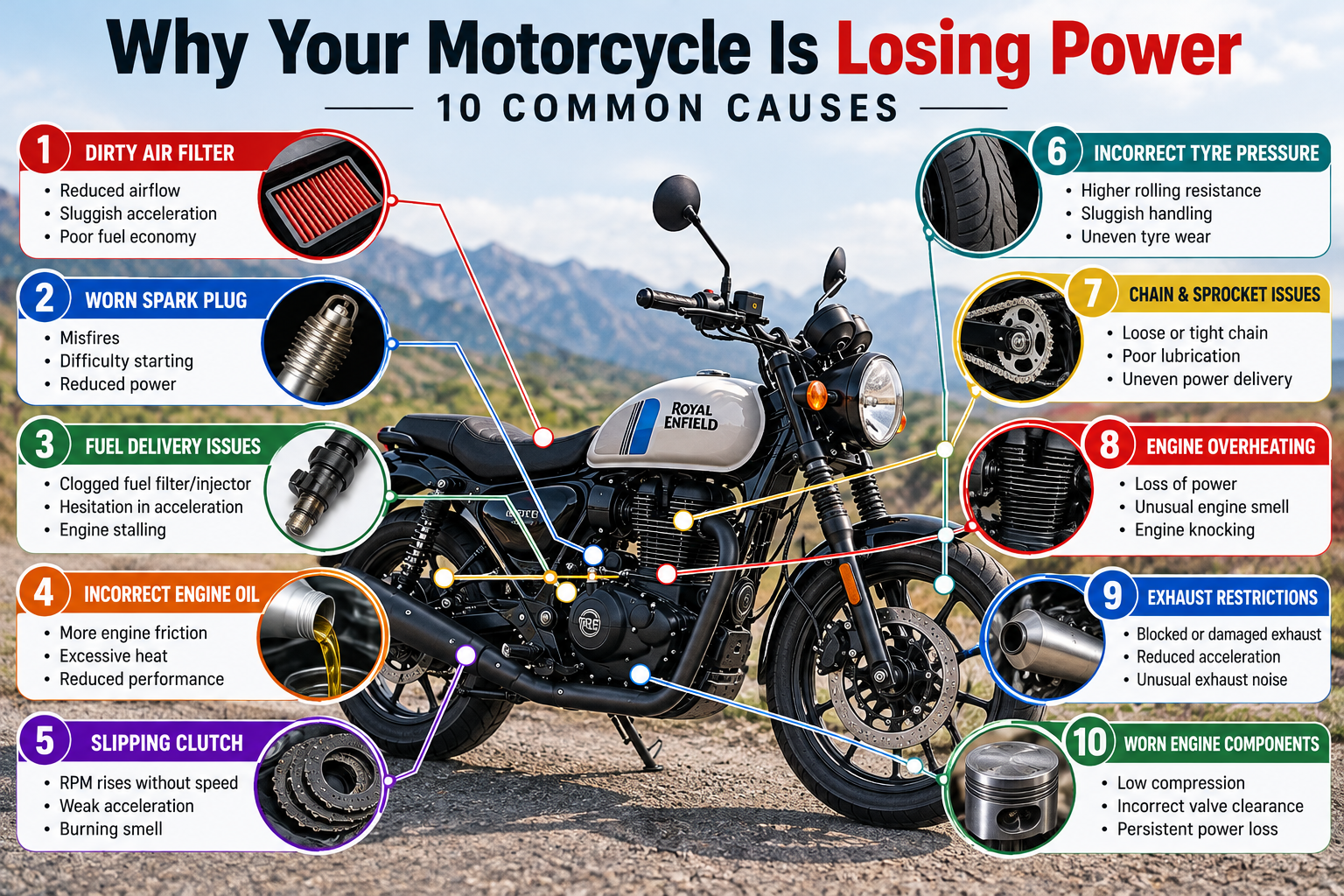
In this guide, we’ll explore 10 common reasons your motorcycle is losing power, the symptoms to look for, and what you can do to address them.
1. A Dirty or Clogged Air Filter
Your motorcycle engine needs a steady supply of clean air for efficient combustion. Over time, dust and debris accumulate in the air filter, restricting airflow and potentially reducing engine performance.
Common symptoms:
- Sluggish acceleration
- Reduced throttle response
- Poor fuel economy
- Uneven engine performance
What to do: Inspect the air filter according to your motorcycle’s service schedule. Clean reusable filters as instructed by the manufacturer and replace disposable filters when necessary. Riders who frequently travel on dusty roads may need more frequent inspections.
2. A Worn or Faulty Spark Plug
The spark plug ignites the compressed air-fuel mixture inside the engine cylinder. If it becomes worn, fouled, or damaged, combustion may become inconsistent.
Common symptoms:
- Engine misfires
- Difficulty starting
- Jerking during acceleration
- Reduced engine power
What to do: Inspect the spark plug for excessive deposits, electrode wear, or damage. Check the gap against the manufacturer’s specification and replace the plug when required. Always use the correct spark plug for your motorcycle.
3. Fuel Delivery Problems
Your motorcycle needs the correct amount of fuel to maintain consistent performance. A clogged fuel filter, dirty injector, blocked carburettor jet, or weak fuel pump can interrupt fuel delivery.
Common symptoms:
- Hesitation when accelerating
- Power loss at higher RPM
- Difficulty starting
- Engine stalling under load
What to do: Check for fuel-related warning signs and ensure you’re using clean fuel. Fuel-injected motorcycles may require injector or fuel-pressure testing, while carburetted bikes may need carburettor cleaning. Have complex fuel-system problems diagnosed by a qualified mechanic.
4. Incorrect Engine Oil or Low Oil Level
Engine oil lubricates moving components and helps manage friction and heat. An oil level that is too low can cause serious engine damage, while an unsuitable oil specification may affect performance and lubrication.
Common symptoms:
- Increased engine noise
- Excessive heat
- Rough engine operation
- Reduced performance in severe cases
What to do: Check the oil level using the procedure specified in your owner’s manual. Top up or replace the oil as needed, using the recommended grade and specification. If the oil-pressure warning appears or the engine makes unusual mechanical noises, stop riding and seek professional assistance.
5. A Slipping Clutch
A worn clutch may fail to transfer engine power efficiently to the transmission. This is especially noticeable during acceleration or when climbing hills.
Common symptoms:
- Engine RPM rises without a matching increase in speed
- Weak acceleration under load
- Burning smell
- Unusual clutch engagement
What to do: Check the clutch free play and adjustment according to the service manual. If the clutch continues slipping, the plates or other clutch components may require inspection and replacement.
6. Incorrect Tyre Pressure
Tyres that are underinflated increase rolling resistance and can make your motorcycle feel heavier and less responsive. Overinflated tyres can also compromise grip and ride quality.
Common symptoms:
- Sluggish handling
- Reduced fuel efficiency
- Unusual tyre wear
- Less predictable cornering
What to do: Check tyre pressure when the tyres are cold and inflate them to the manufacturer’s recommended values for your riding conditions and load. Inspect the tyres for cuts, damage, and excessive wear.
7. A Loose or Poorly Maintained Chain
The drive chain transfers power from the gearbox to the rear wheel. A chain that is too tight, excessively loose, dry, or badly worn can cause rough power delivery and additional wear.
Common symptoms:
- Jerking during acceleration
- Chain noise
- Uneven power delivery
- Visible chain or sprocket wear
What to do: Check chain slack using the specified procedure, clean and lubricate the chain as recommended, and inspect the sprockets. Replace worn components as a set when required.
8. Engine Overheating
Excessive engine temperature can affect performance and, in severe cases, cause serious mechanical damage. Overheating may result from inadequate lubrication, restricted cooling airflow, cooling-system faults, or prolonged operation under demanding conditions.
Common symptoms:
- Noticeable loss of power
- Unusual engine smell
- Knocking or abnormal noises
- Temperature warning or coolant loss on liquid-cooled motorcycles
What to do: Stop safely if the engine shows signs of overheating. Allow it to cool before inspecting it. Check the oil level and, on liquid-cooled motorcycles, the cooling system according to the owner’s manual. Never open a hot radiator cap. Repeated overheating requires professional diagnosis.
9. Exhaust Restrictions or Leaks
The exhaust system helps remove combustion gases from the engine. A damaged or restricted exhaust can affect engine breathing and reduce performance.
Common symptoms:
- Reduced acceleration
- Unusual exhaust noise
- Excessive heat around exhaust components
- Poor engine response
What to do: Look for visible damage, loose connections, or unusual changes in exhaust sound. Internal restrictions or catalytic-converter problems require proper inspection. Avoid removing emissions-control equipment as a troubleshooting shortcut.
10. Worn Engine Components or Incorrect Valve Clearance
If basic maintenance and fuel-delivery checks do not resolve the problem, internal engine condition may be responsible.
Worn piston rings, leaking valves, incorrect valve clearance, or low compression can affect combustion and reduce power.
Common symptoms:
- Persistent loss of power
- Difficult starting
- Excessive oil consumption
- Abnormal mechanical noise
- Persistent smoke from the exhaust
What to do: A mechanic may perform a compression test, leak-down test, or valve-clearance inspection to identify the problem. Repairs depend on the diagnosis and the condition of the engine.
How to Diagnose Motorcycle Power Loss
Rather than replacing parts randomly, follow a systematic approach.
- Check the basics: Look at tyre pressure, engine oil level, chain condition, and the air filter.
- Inspect ignition components: Check the spark plug and its connections.
- Evaluate fuel delivery: Look for hesitation, stalling, or symptoms that worsen under load.
- Check the transmission and clutch: Notice whether engine RPM rises without a corresponding increase in speed.
- Look for overheating or warning lights: Stop riding if serious warning signs appear.
- Seek professional testing: If the cause remains unclear, ask a mechanic to check fuel pressure, electronic diagnostics, compression, and valve clearance as appropriate.
How to Prevent Motorcycle Power Loss
Regular preventive maintenance can help your motorcycle perform reliably.
- Follow the manufacturer’s service schedule.
- Replace the air filter and spark plug when required.
- Use the recommended engine oil.
- Maintain correct tyre pressure.
- Clean, lubricate, and adjust the chain properly.
- Use clean, suitable fuel.
- Address unusual noises, vibrations, and warning lights promptly.
- Avoid overloading the motorcycle or ignoring overheating.
Frequently Asked Questions
Why is my motorcycle losing power when accelerating?
Common causes include a restricted air filter, worn spark plug, fuel-delivery problem, slipping clutch, or an ignition fault. The exact cause depends on the symptoms and the motorcycle model.
Why does my bike lose power at high speed?
Power loss at high speed can be related to fuel starvation, ignition problems, restricted airflow or exhaust flow, or engine compression issues. A proper diagnosis is needed before replacing parts.
Can a dirty air filter reduce motorcycle power?
Yes. A severely clogged air filter can restrict airflow and reduce engine performance. Inspect and replace it according to the manufacturer’s recommendations.
Can bad engine oil cause power loss?
Incorrect or insufficient oil can increase friction and, in severe cases, contribute to engine damage. Check the level and specification, but don’t assume oil is the cause without considering other symptoms.
Is it safe to ride a motorcycle that is losing power?
A mild, gradual change may allow you to reach a nearby workshop cautiously, but severe power loss, repeated stalling, overheating, abnormal engine noises, or a flashing warning light warrants stopping safely and arranging assistance.
Final Thoughts
A motorcycle losing power doesn’t always mean the engine needs major repairs. In many cases, the cause is a dirty air filter, worn spark plug, fuel-delivery issue, or neglected chain. However, overheating, clutch failure, and internal engine problems can also affect performance and should not be ignored.
The best approach is to identify the symptoms, check the basic maintenance items, and have the motorcycle professionally diagnosed if the problem persists. Regular servicing and early troubleshooting can help restore performance, improve reliability, and prevent minor faults from becoming expensive repairs.