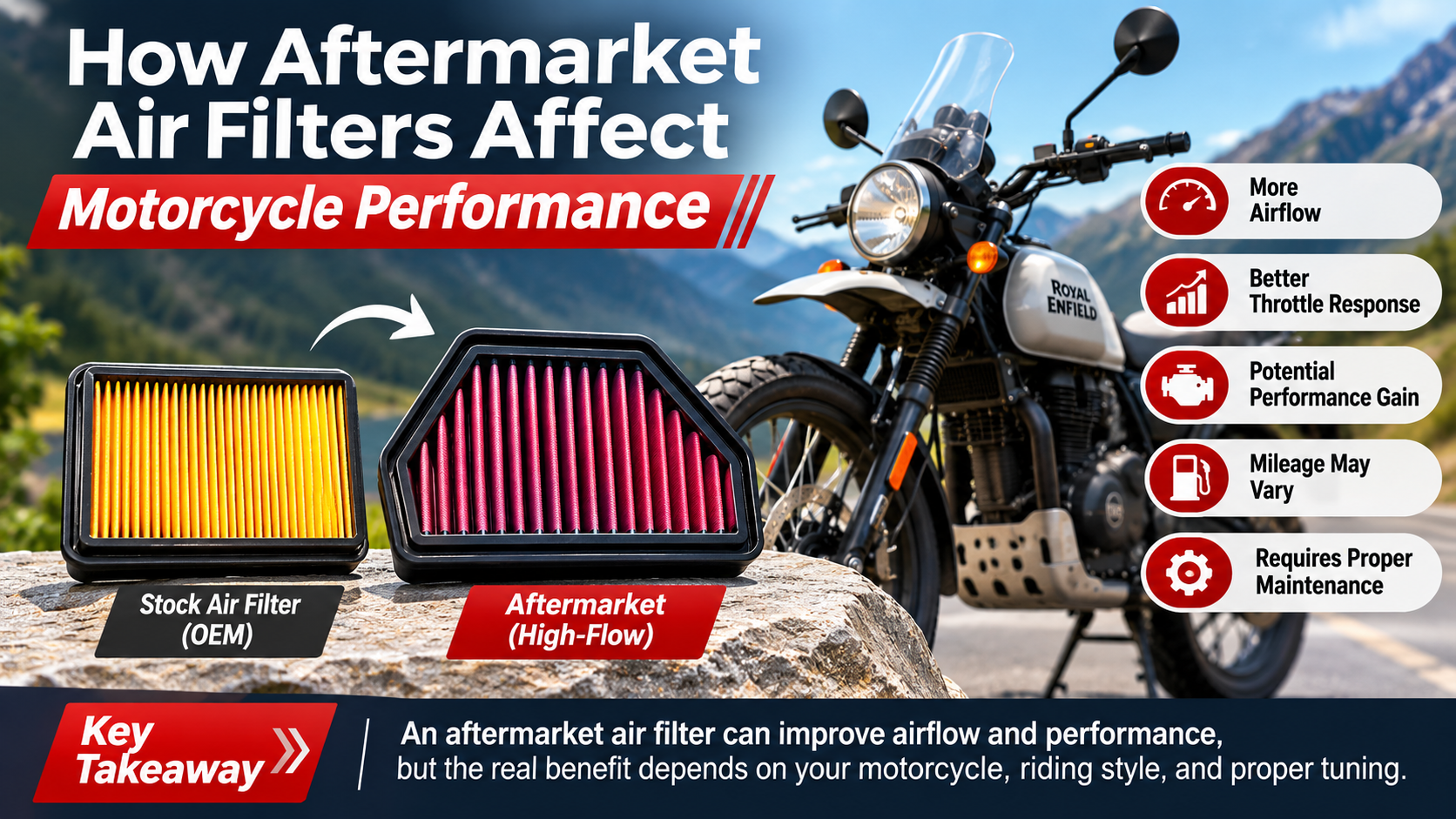
Motorcycle enthusiasts often look for simple upgrades that can improve engine performance, throttle response, and overall riding experience. One popular modification is replacing the factory-fitted air filter with an aftermarket high-flow air filter.
These filters are commonly marketed as performance upgrades because they allow greater airflow into the engine. But does more airflow automatically mean more horsepower? Can an aftermarket air filter improve acceleration, fuel efficiency, or engine sound?
The answer depends on your motorcycle, the type of filter, and whether the engine’s fuel delivery system is properly calibrated.
In this guide, we’ll explore how aftermarket air filters work, their advantages and disadvantages, and whether upgrading your motorcycle’s air filter is actually worth it.
1. What Is an Aftermarket Motorcycle Air Filter?
An air filter prevents dust, dirt, sand, and other contaminants from entering the engine through the intake system.
Factory-fitted air filters are designed to balance airflow, filtration efficiency, noise control, durability, and everyday performance.
Aftermarket air filters are replacement products designed to modify one or more of these characteristics.
Common types include:
- High-flow cotton filters: Often use multiple layers of oiled cotton to allow airflow while trapping contaminants.
- Foam performance filters: Use specially designed foam material and are available in different configurations.
- Synthetic performance filters: Use synthetic filtration media designed to balance airflow and particle capture.
- Pod filters: Individual filters fitted directly to the carburettor or throttle-body intake instead of using the original airbox arrangement.
Not every aftermarket filter provides the same benefits. Its construction, filtration quality, compatibility, and maintenance requirements matter.
2. Does an Aftermarket Air Filter Increase Horsepower?
One of the biggest reasons riders purchase performance air filters is the expectation of increased horsepower.
A high-flow filter may reduce intake restriction compared with a restrictive or dirty factory filter. This can help an engine breathe more freely, particularly when the original intake system is a limiting factor.
However, replacing a clean factory air filter with an aftermarket filter does not automatically increase engine power.
The actual improvement depends on several factors:
- Original intake-system restrictions
- Engine displacement and design
- Throttle-body or carburettor configuration
- Exhaust-system modifications
- Fuel-injection calibration
- Overall engine condition
On many stock commuter motorcycles, the performance difference may be negligible.
On certain modified motorcycles, a suitable high-flow filter combined with proper fuel tuning may contribute to improved engine output.
3. Improved Airflow and Throttle Response
A motorcycle engine needs a controlled supply of air to burn fuel efficiently.
Some aftermarket filters are designed to reduce intake resistance, potentially improving airflow under certain operating conditions.
This may contribute to:
- More responsive throttle behaviour
- Improved engine breathing
- Better performance at certain RPM ranges
- Smoother power delivery when paired with suitable tuning
However, throttle response is influenced by several other factors, including fuel mapping, ignition timing, intake design, and throttle calibration.
A filter upgrade alone may not produce a noticeable improvement.
4. How Aftermarket Air Filters Affect Fuel Efficiency
Many riders assume that allowing more air into the engine automatically improves fuel economy.
In reality, fuel efficiency depends on maintaining the correct air-fuel mixture and operating the engine efficiently.
On fuel-injected motorcycles, the ECU adjusts fuel delivery using available sensor information and its programmed operating limits. A significant intake modification may move airflow beyond what the original calibration can compensate for.
On carburetted motorcycles, airflow and fuel delivery may need to be adjusted manually.
An aftermarket filter can therefore have different effects depending on the motorcycle.
Possible outcomes include:
- No noticeable mileage change
- Slight improvement under particular operating conditions
- Increased fuel consumption if additional fuel is required
- Poor running if the air-fuel mixture becomes unsuitable
If you install a high-flow filter, monitor engine behaviour and have the fuel system checked if symptoms develop.
5. Does a Performance Air Filter Change Engine Sound?
Yes, an aftermarket air filter can change the sound produced by the intake system.
Some high-flow filters, particularly pod-style filters, allow more intake noise to reach the rider.
You may notice:
- A louder intake sound during acceleration
- More noticeable air-suction noise
- A slightly different engine sound at higher RPM
However, this doesn’t necessarily mean the motorcycle is producing more power.
The original airbox also plays an important role in managing intake noise and airflow characteristics. Removing it can change how the motorcycle behaves.
6. Reusable vs Disposable Air Filters
Another advantage of certain aftermarket filters is that they can be cleaned and reused.
Let’s compare the two options.
Factory Disposable Air Filters
Most standard paper filters are designed to be replaced when they become dirty or reach their service limit.
Advantages:
- Affordable replacement options
- Reliable filtration when properly specified
- Simple maintenance
- Designed around the original intake system
Limitations:
- Require replacement rather than routine washing
- Generate recurring replacement costs
Reusable Performance Air Filters
Many aftermarket cotton and foam filters are designed for repeated cleaning.
Advantages:
- Can be reused when maintained correctly
- May offer improved airflow in certain applications
- Can reduce repeated filter replacement purchases
- Available for several motorcycle models
Limitations:
- Require periodic cleaning
- Some types need special filter oil
- Incorrect cleaning can damage filtration media
- Improper maintenance can allow dust into the engine
Always follow the filter manufacturer’s cleaning and servicing instructions.
7. Can Aftermarket Air Filters Damage Your Motorcycle Engine?
An aftermarket air filter is not automatically harmful. However, poor-quality filters or incorrect installation can create problems.
The main concern is filtration efficiency.
If a filter allows fine dust and abrasive particles to enter the engine, they can accelerate wear on components such as:
- Cylinder walls
- Piston rings
- Valves
- Other internal engine surfaces
Other potential issues include:
Incorrect air-fuel mixture: Significant intake changes may affect fueling and engine behaviour.
Improper installation: Gaps around the filter or poorly sealed intake connections can allow unfiltered air to enter.
Over-oiling: Excessive oil on certain reusable filters can affect airflow or contaminate nearby intake components.
Water exposure: Poorly positioned exposed filters may be more vulnerable to water ingestion during heavy rain or water crossings.
For motorcycles regularly used on dusty Indian roads, filtration quality should be a higher priority than advertised airflow figures.
8. Aftermarket Air Filters for Commuter vs Performance Bikes
The benefits of an aftermarket air filter depend heavily on how the motorcycle is designed and used.
Commuter Motorcycles
Examples include:
- Hero Splendor
- Honda Shine
- Bajaj Pulsar 125
- TVS Raider
- Hero Glamour
These motorcycles are generally designed for fuel efficiency, reliability, and everyday usability.
A high-flow filter may offer little practical benefit if the factory intake system is already well matched to the engine.
For daily commuters, a quality replacement filter that provides proper filtration is often the better choice.
Performance Motorcycles
Examples include:
- KTM Duke series
- Yamaha R15
- Royal Enfield Interceptor 650
- Royal Enfield Continental GT 650
- Kawasaki Ninja series
Performance motorcycles may benefit from carefully selected intake upgrades, particularly when combined with compatible exhaust modifications and professional fuel-system tuning.
However, results vary by engine design. Always use a filter specifically designed for the motorcycle.
9. Things to Check Before Buying an Aftermarket Air Filter
Before purchasing a performance air filter, consider these important factors.
Motorcycle Compatibility
Check the exact model, engine variant, and model year. A filter that physically fits may not necessarily provide the correct sealing or airflow characteristics.
Filtration Efficiency
Look for reliable filtration information from the manufacturer. High airflow is not useful if the filter fails to protect the engine from dust.
Construction Quality
Check the quality of the filtration media, sealing edges, frame, and overall construction.
Maintenance Requirements
Some reusable filters require dedicated cleaning solutions and filter oil. Consider whether you’re comfortable maintaining them regularly.
Warranty and Legal Considerations
Check whether the modification affects your motorcycle’s warranty, emissions compliance, or applicable road-use regulations.
Installation
Ensure the filter sits correctly inside the airbox or intake assembly. Never leave gaps that could allow unfiltered air to enter the engine.
10. Is an Aftermarket Air Filter Worth It?
The answer depends on your expectations.
| Requirement | Is an Aftermarket Filter Worth Considering? |
|---|---|
| Better airflow | Yes, if the original intake is restrictive |
| More horsepower | Possible, but not guaranteed |
| Better mileage | Not guaranteed |
| Improved throttle response | Possible with a compatible setup |
| Louder intake sound | Possible, especially with pod filters |
| Lower maintenance costs | Possible with reusable filters |
| Better engine protection | Depends on filtration quality |
If your motorcycle is completely stock and primarily used for commuting, replacing the original filter with a quality OEM-equivalent product may be the most sensible option.
If you are modifying your motorcycle for performance, a compatible high-flow filter may be worth considering as part of a properly engineered intake and tuning upgrade.
Common Mistakes to Avoid
Choosing airflow over filtration: Never compromise engine protection just to achieve higher airflow.
Expecting instant horsepower gains: A performance filter alone rarely transforms a stock motorcycle.
Ignoring fuel tuning: Significant intake modifications may require fuel-system calibration.
Over-oiling reusable filters: Follow the manufacturer’s instructions to avoid damaging the filter or affecting intake components.
Using incompatible pod filters: Removing the factory airbox can affect airflow stability, water protection, and engine tuning.
Ignoring maintenance: Reusable filters still need regular inspection and cleaning.
Frequently Asked Questions
Does a high-flow air filter increase motorcycle mileage?
Not necessarily. Mileage depends on engine tuning, riding conditions, throttle input, and fuel delivery. A high-flow filter does not automatically improve fuel economy.
Can I install a performance air filter without ECU tuning?
Some replacement panel filters are designed to work with the original engine calibration. However, substantial intake modifications may require ECU or carburettor tuning. Follow the filter manufacturer’s recommendations.
Are reusable air filters better than normal filters?
Reusable filters can offer long-term convenience and may reduce replacement frequency. However, their filtration quality and maintenance requirements vary. A good-quality factory filter can be an excellent choice.
Do aftermarket air filters make motorcycles louder?
Some designs, particularly pod filters, increase intake noise. Replacement panel filters fitted inside the original airbox may produce little noticeable sound difference.
How often should I clean a reusable motorcycle air filter?
Follow the filter manufacturer’s maintenance schedule. Dusty riding conditions may require more frequent inspection and cleaning.
Can I use a high-flow air filter on a Royal Enfield?
It depends on the Royal Enfield model and the filter’s compatibility. Choose a model-specific product that provides proper sealing and filtration. If the intake configuration changes significantly, have the fuel system checked.
Final Thoughts
Aftermarket air filters can be a useful motorcycle upgrade, but their benefits are often misunderstood. While certain high-flow filters can improve airflow and support performance modifications, they do not automatically increase horsepower or fuel efficiency.
For everyday commuters, a quality factory-specification filter often provides the best balance of filtration, reliability, and convenience. For performance enthusiasts, a compatible high-flow filter combined with proper fuel tuning may offer additional benefits.
Ultimately, the best air filter is not simply the one that allows the most air into your engine. It is the one that provides the right balance of airflow, filtration efficiency, compatibility, and long-term engine protection.