
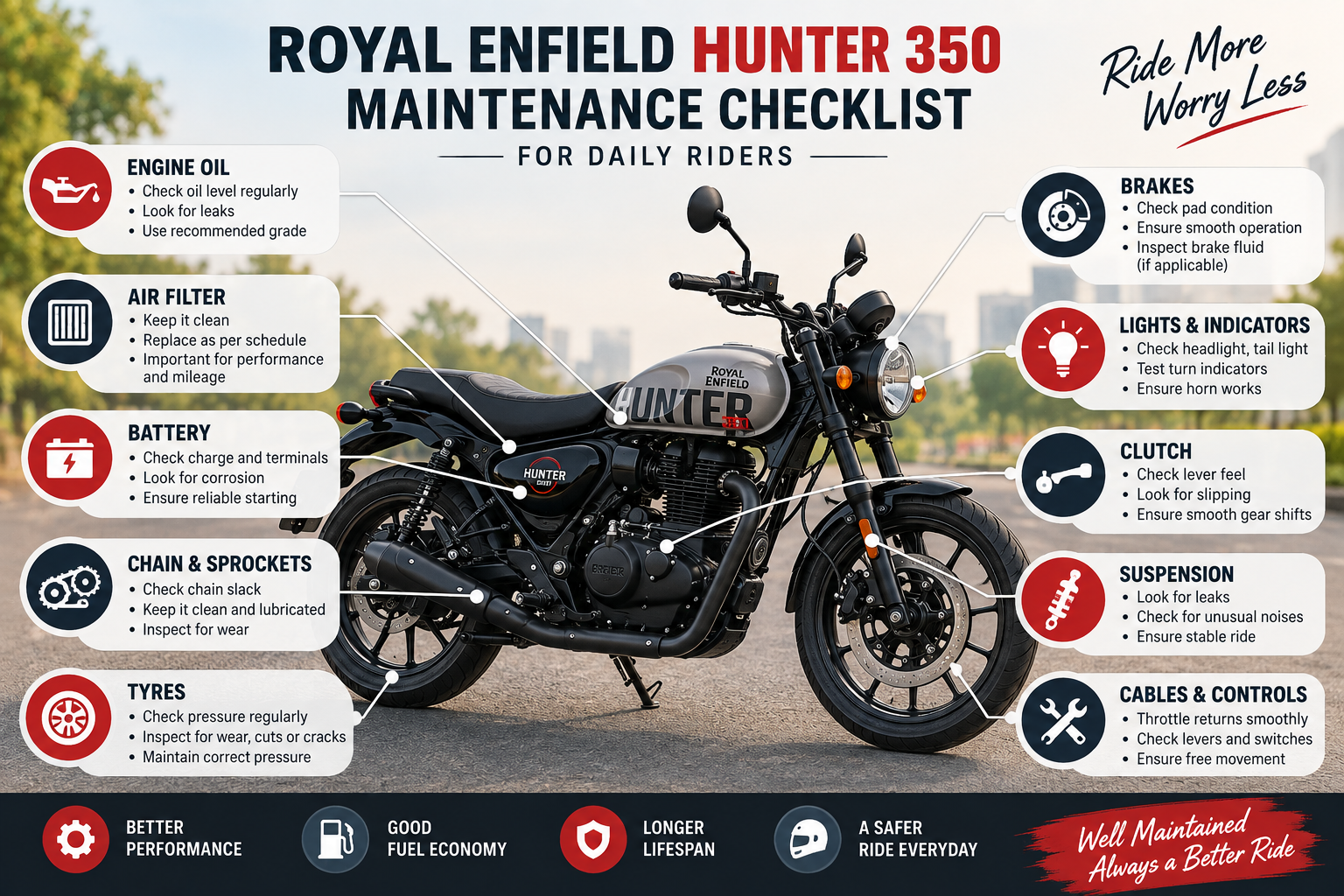
The Royal Enfield Hunter 350 is designed to work well as an everyday motorcycle, but regular maintenance is essential if you want smooth performance, good fuel economy, and long-term reliability. Daily commuting exposes the bike to traffic, dust, heat, frequent braking, and repeated stop-and-go riding, which can accelerate wear on several components.
A simple maintenance routine can help you identify problems before they become expensive repairs.
1. Check Engine Oil Regularly
Engine oil lubricates the moving parts inside the Hunter 350’s engine and helps manage heat and friction.
For daily riders, check the oil level regularly, particularly before long rides.
Look for:
- Correct oil level
- Oil leaks around the engine
- Unusual changes in oil appearance
- Increased oil consumption
Always use the engine oil grade and specification recommended in the owner’s manual.
2. Inspect the Chain and Sprockets
The chain transfers power from the engine to the rear wheel and is subjected to constant load.
A dry, loose, or excessively worn chain can cause:
- Jerky acceleration
- Excessive chain noise
- Poor power delivery
- Accelerated sprocket wear
Check the chain regularly for correct slack, lubrication, rust, and damaged links. Follow the manufacturer’s recommended procedure for checking and adjusting chain tension.
3. Check Tyre Pressure
Correct tyre pressure affects handling, braking, tyre life, and fuel economy.
Check tyre pressure when the tyres are cold and use the pressure specified by Royal Enfield for your particular Hunter 350 configuration.
Also inspect for:
- Uneven tread wear
- Cuts or cracks
- Embedded objects
- Excessively worn tread
Incorrect pressure can make the motorcycle feel unstable and can increase tyre wear.
4. Inspect the Brakes
Daily city riding involves frequent braking, making brake inspection particularly important.
Check:
- Front brake operation
- Rear brake operation
- Brake-pad condition
- Brake-fluid level where applicable
- Unusual squealing or grinding
If the brake lever feels unusually soft or braking performance changes noticeably, have the braking system inspected promptly.
5. Keep the Air Filter Clean
The air filter prevents dust and other particles from entering the engine.
Riding through dusty roads or heavy traffic can cause the filter to become dirty faster.
A restricted air filter can contribute to:
- Poor throttle response
- Reduced performance
- Increased fuel consumption
Inspect and replace the filter according to the manufacturer’s service schedule and the conditions in which you ride.
6. Monitor the Battery
The Hunter 350’s electrical system relies on a healthy battery for reliable starting and operation of electrical components.
Look out for:
- Slow cranking
- Difficulty starting
- Dim lights
- Electrical accessories behaving unusually
- Corrosion around battery terminals
If your motorcycle is parked for extended periods, periodic battery maintenance may be necessary.
7. Check the Lights and Indicators
Before riding, especially at night or during poor weather, make sure all lighting works correctly.
Inspect:
- Headlight
- Brake light
- Turn indicators
- Tail light
- Horn
A failed bulb or electrical connection can reduce your visibility to other road users.
8. Inspect the Clutch
A motorcycle used for daily commuting experiences frequent clutch operation.
Pay attention to:
- Clutch lever feel
- Engagement point
- Difficulty changing gears
- Clutch slipping under acceleration
- Unusual noises
If engine RPM rises without a corresponding increase in road speed, the clutch may be slipping and should be inspected.
9. Check the Cooling System
The Hunter 350 uses an air/oil-cooled engine, so maintaining adequate airflow and keeping the engine exterior reasonably clean is important.
Avoid allowing excessive dirt or debris to accumulate around areas designed to dissipate heat.
If the motorcycle repeatedly feels unusually hot or develops a change in engine behavior, have it inspected rather than assuming the temperature is normal.
10. Inspect the Suspension
Suspension components affect comfort, stability, and handling.
Look for:
- Oil leakage around fork seals
- Unusual suspension noises
- Excessive bouncing
- Uneven ride height
- Loose or damaged components
Suspension problems can become particularly noticeable when riding over potholes or uneven roads.
11. Check Cables, Levers, and Controls
Daily inspection of basic controls takes only a few minutes.
Check that:
- Throttle returns smoothly
- Clutch lever operates correctly
- Brake levers feel normal
- Gear changes are smooth
- Steering moves freely from side to side
Never continue riding if a critical control is sticking or behaving unpredictably.
12. Follow the Scheduled Service Intervals
Routine servicing is more important than simply fixing problems when they appear.
During scheduled service, technicians can inspect components that aren’t practical to check during a quick daily inspection.
Depending on the service schedule, this may include:
- Engine oil replacement
- Oil-filter replacement
- Air-filter inspection/replacement
- Brake inspection
- Chain adjustment and lubrication
- Fastener checks
- Electrical-system inspection
- General mechanical inspection
Always follow the current Royal Enfield service schedule for your motorcycle’s model year and market, rather than relying on a generic interval.
Hunter 350 Maintenance Checklist
| Component | What to Check | Frequency |
|---|---|---|
| Engine oil | Level and leaks | Regularly |
| Chain | Slack, lubrication, wear | Regularly |
| Tyres | Pressure and tread | Regularly |
| Brakes | Pads, operation, fluid | Regularly |
| Air filter | Dirt and condition | As scheduled/conditions require |
| Battery | Starting performance and terminals | Regularly |
| Lights | Headlight, indicators, brake light | Regularly |
| Clutch | Operation and engagement | Regularly |
| Suspension | Leaks and unusual movement | Regularly |
| Scheduled service | Full inspection and replacement items | According to Royal Enfield schedule |
Extra Maintenance for City Riders
Daily urban commuting can be harder on a motorcycle than occasional highway riding.
Stop-and-go traffic means:
- More clutch operation
- More braking
- More idling
- More frequent acceleration
- Greater exposure to dust and pollution
If your Hunter 350 is primarily used in congested traffic, pay particular attention to the chain, brakes, clutch, tyres, air filter, and engine oil.
Maintenance Before a Long Ride
Before taking your Hunter 350 on a highway or touring trip, perform a more thorough inspection.
Check:
- Engine-oil level
- Tyre pressure and condition
- Chain tension and lubrication
- Brake operation
- Lights and indicators
- Battery and starting performance
- Clutch and throttle operation
- Suspension
- Fasteners and visible leaks
It’s much easier to identify a problem at home than on the side of a highway.
Common Hunter 350 Maintenance Mistakes
Ignoring the Chain
A neglected chain can wear both the chain and sprockets prematurely.
Checking Tyre Pressure Infrequently
Tyre pressure changes over time and can also vary with temperature. Check it regularly rather than relying on appearance.
Delaying Scheduled Service
A motorcycle can continue running even when maintenance is overdue, but that doesn’t mean the components are operating optimally.
Using Incorrect Fluids or Parts
Always verify the recommended specifications before purchasing replacement parts, lubricants, or consumables.
Ignoring Small Changes
Unusual noises, vibrations, starting problems, or changes in braking and handling can be early signs of a developing problem.
Frequently Asked Questions
How often should I service my Hunter 350?
Follow the official Royal Enfield service schedule applicable to your model year and market. Service requirements can vary, so the owner’s manual and authorized service information should take priority.
How often should I lubricate the chain?
Chain lubrication frequency depends on riding conditions. Rain, dust, frequent commuting, and long-distance riding can require more frequent attention. Follow the manufacturer’s recommendations and inspect the chain regularly.
What should I check before riding every day?
A quick check of the tyres, brakes, lights, horn, throttle, and visible leaks can help identify obvious problems before you ride.
Does daily city riding require more maintenance?
It can. Frequent stopping, accelerating, braking, clutch use, idling, and riding through dusty or congested areas can increase wear on several components.
Final Thoughts
Maintaining a Royal Enfield Hunter 350 doesn’t have to be complicated. A few minutes of regular inspection can help you catch problems before they turn into expensive repairs.
For daily riders, give particular attention to engine oil, chain and sprockets, tyres, brakes, air filter, battery, clutch, suspension, and electrical components. Combine these checks with the manufacturer’s scheduled servicing, and your Hunter 350 can remain dependable for everyday commuting and longer rides.
The most important rule is simple: follow the specifications and service intervals provided by Royal Enfield for your specific motorcycle, rather than assuming that every Hunter 350 requires exactly the same maintenance routine.